278 Visitors Tracking The Tropics!
SHOW ME SOME LOVE AND SUPPORT
Website: TrackTheTropics.com/DONATE
Venmo: @TrackTheTropicsLouisiana
Cash App: Cash.App/$TrackTheTropics
Subscribe: FB.com/TrackTheTropics
Website: TrackTheTropics.com/DONATE
Venmo: @TrackTheTropicsLouisiana
Cash App: Cash.App/$TrackTheTropics
Subscribe: FB.com/TrackTheTropics
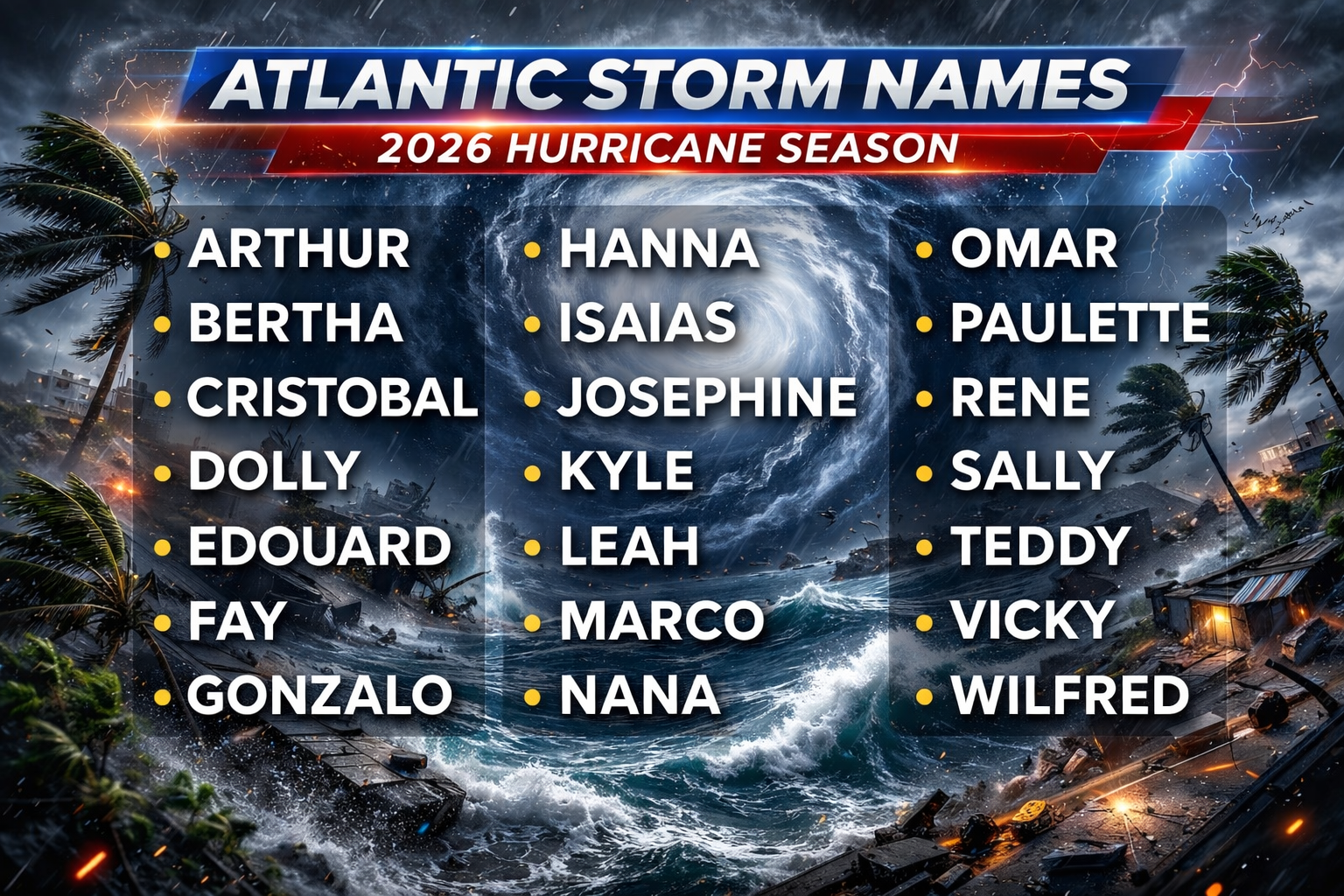
Track The Tropics is the #1 source to track the tropics 24/7! Since 2013 the main goal of the site is to bring all of the important links and graphics to ONE PLACE so you can keep up to date on any threats to land during the Atlantic Hurricane Season! Hurricane Season 2026 in the Atlantic starts on June 1st and ends on November 30th. Do you love Spaghetti Models? Well you've come to the right place!! Remember when you're preparing for a storm: Run from the water; hide from the wind!
Tropical Atlantic Weather Resources
- NOAA National Hurricane Center
- International Meteorology Database
- FSU Tropical Cyclone Track Probabilities
- Brian McNoldy Atlantic Headquarters
- Brian McNoldy Tropical Satellite Sectors
- Brian McNoldy Infrared Hovmoller
- Brian McNoldy Past TC Radar Loops
- Weather Nerds TC Guidance
- Twister Data Model Guidance
- NOAA Tropical Cyclone Tracks
- Albany GFS/ EURO Models/ Ensembles
- Albany Tropical Cyclone Guidance
- Albany Tropical Atlantic Model Maps
- Pivotal Weather Model Guidance
- Weather Online Model Guidance
- UKMet Model Guidance/ Analysis/ Sat
- ECMWF (EURO) Model Guidance
- FSU Tropical Model Outputs
- FSU Tropical Cyclone Genesis
- Penn State Tropical E-Wall
- NOAA HFIP Ruc Models
- Navy NRL TC Page
- College of DuPage Model Guidance
- WXCharts Model Guidance
- NOAA NHC Analysis Tools
- NOAA NHC ATCF Directory
- NOAA NCEP/EMC Cyclogenesis Tracking
- NOAA NCEP/EMC HWRF Model
- NOAA HFIP Model Products
- University of Miami Ocean Heat
- COLA Max Potential Hurricane Intensity
- Colorado State RAMMB TC Tracking
- Colorado State RAMMB Floaters
- Colorado State RAMMB GOES-16 Viewer
- NOAA NESDIS GOES Satellite
- ASCAT Ocean Surface Winds METOP-A
- ASCAT Ocean Surface Winds METOP-B
- Michael Ventrice Waves / MJO Maps
- TropicalAtlantic.com Analysis / Recon
- NCAR/RAL Tropical Cyclone Guidance
- CyclonicWX Tropical Resources
Historic Louisiana Storms By Month
January
June
July
August
September
October
Tracking Ophelia – 2023 Atlantic Hurricane Season
NHC Important Links: NHC Discussion / Public Advisory / Forecast Advisory / Wind Probs / Graphics / Storm Archive
Storm Tracking Important Links:
Wind Analysis /
Coastal Inundation Info /
Tide Information /
Surge Map /
Surge Potential /
Coastal Risk Map /
Microwave Imagery /
Advanced Dvorak ADT /
GOES16 Satellite Storm Page /
FSU Track Probability /
NOAA Tracker /
Albany Tracker /
Navy NRL Page /
HFIP Products /
Tropical Atlantic Storm Page /
NCAR Guidance Page /
CyclonicWX Tracker /
CIMSS Tracker / Tropical Tidbits Storm Page /UWM Tracker / SFWMD Models
Peak Storm Surge Forecast

Potential Storm Surge Flooding Map (Inundation)
Additional Potential Storm Surge Map

Potential Storm Surge Flooding Map (Inundation)
Additional Potential Storm Surge Map
Other Floater Sites:TropicalTidbits - NRL Floaters - CyclonicWx - RAMMB Sat -
RAMMB Model Data -
RAMMB Wind Products
- Thu, 18 Jun 2026 02:48:12 +0000: Atlantic Post-Tropical Cyclone Arthur Advisory Number 8 - Atlantic Post-Tropical Cyclone Arthur Advisory Number 8
000
WTNT31 KNHC 180248
TCPAT1
BULLETIN
Post-Tropical Cyclone Arthur Advisory Number 8
NWS National Hurricane Center Miami FL AL012026
1000 PM CDT Wed Jun 17 2026
...ARTHUR DEGENERATES TO A LOW PRESSURE AREA ALONG THE UPPER
TEXAS COAST...
...LIFE-THREATENING FLOODING EXPECTED TO CONTINUE ACROSS PORTIONS
OF THE SOUTHEASTERN UNITED STATES...
SUMMARY OF 1000 PM CDT...0300 UTC...INFORMATION
-----------------------------------------------
LOCATION...29.7N 94.5W
ABOUT 35 MI...55 KM NNE OF GALVESTON TEXAS
ABOUT 85 MI...135 KM WSW OF LAKE CHARLES LOUISIANA
MAXIMUM SUSTAINED WINDS...35 MPH...55 KM/H
PRESENT MOVEMENT...NE OR 40 DEGREES AT 9 MPH...15 KM/H
MINIMUM CENTRAL PRESSURE...1000 MB...29.53 INCHES
WATCHES AND WARNINGS
--------------------
CHANGES WITH THIS ADVISORY:
All coastal watches and warnings are discontinued.
SUMMARY OF WATCHES AND WARNINGS IN EFFECT:
None.
DISCUSSION AND OUTLOOK
----------------------
At 1000 PM CDT (0300 UTC), the center of Post-Tropical Cyclone
Arthur was located near latitude 29.7 North, longitude 94.5 West.
The post-tropical cyclone is moving toward the northeast near 9 mph
(15 km/h). A northeastward motion at a faster forward speed is
expected tonight, followed by a turn toward the east-northeast
Thursday through Friday. On the forecast track, the remnants of
Arthur should move farther inland over southeastern Texas and
western Louisiana tonight, then cross the southeastern United States
Thursday through Friday.
Maximum sustained winds are near 35 mph (55 km/h) with higher gusts.
While additional weakening is expected as the system moves inland,
the remnants of Arthur will continue to produce widespread heavy
rains across the southeastern United States during the next few
days.
The estimated minimum central pressure based on surface observations
is 1000 mb (29.53 inches).
HAZARDS AFFECTING LAND
----------------------
Key messages for remnants of Arthur can be found in the Tropical
Cyclone Discussion under AWIPS header MIATCDAT1 and WMO header
WTNT41 KNHC.
RAINFALL: Arthur is expected to produce rainfall totals of 5 to 10
inches, with isolated higher totals near 20 inches, through early
Friday from the Mid and Upper Texas coast east-northeast into
southern and central portions of Louisiana, Mississippi, and
Alabama, along with western portions of Georgia and the Florida
Panhandle. This could generate dangerous to life-threatening flash
flooding.
For a complete depiction of forecast rainfall associated with the
remnants of Arthur, please see the National Weather Service Storm
Total Rainfall Graphic available at
hurricanes.gov/graphics_at1.shtml?rainqpf and the Flash Flood Risk
graphic at hurricanes.gov/graphics_at1.shtml?ero.
For a list of rainfall observations (and wind reports) associated
with Arthur, see the companion storm summary at WBCSCCNS1 with the
WMO header ACUS44 KWBC or at the following link:
www.wpc.ncep.noaa.gov/discussions/nfdscc1.html.
WIND: Winds gusts to tropical-storm force are possible along the
Louisiana coast tonight.
STORM SURGE: Water levels remain elevated along the Upper Texas
coast but will continue to subside overnight.
SURF: Swells generated by Arthur are likely to cause
life-threatening surf and rip current conditions along the
northwestern Gulf Coast for the next day or two. Please consult
products from your local weather office.
A depiction of rip current risk for the United States can be found
at: hurricanes.gov/graphics_at1.shtml?ripCurrents
TORNADO: A few tornadoes are possible tonight across southeast
Louisiana and southern Mississippi, and tomorrow into parts of
Alabama, Georgia, and the Florida Panhandle.
NEXT ADVISORY
-------------
This is the last public advisory issued by the National Hurricane
Center on this system.
$$
Forecaster Beven
- Thu, 18 Jun 2026 02:47:42 +0000: Atlantic Post-Tropical Cyclone Arthur Forecast/Adv... - Atlantic Post-Tropical Cyclone Arthur Forecast/Advisory Number 8
000
WTNT21 KNHC 180247
TCMAT1
POST-TROPICAL CYCLONE ARTHUR FORECAST/ADVISORY NUMBER 8
NWS NATIONAL HURRICANE CENTER MIAMI FL AL012026
0300 UTC THU JUN 18 2026
POST-TROPICAL CYCLONE CENTER LOCATED NEAR 29.7N 94.5W AT 18/0300Z
POSITION ACCURATE WITHIN 30 NM
PRESENT MOVEMENT TOWARD THE NORTHEAST OR 40 DEGREES AT 8 KT
ESTIMATED MINIMUM CENTRAL PRESSURE 1000 MB
MAX SUSTAINED WINDS 30 KT WITH GUSTS TO 40 KT.
WINDS AND SEAS VARY GREATLY IN EACH QUADRANT. RADII IN NAUTICAL
MILES ARE THE LARGEST RADII EXPECTED ANYWHERE IN THAT QUADRANT.
REPEAT...CENTER LOCATED NEAR 29.7N 94.5W AT 18/0300Z
AT 18/0000Z CENTER WAS LOCATED NEAR 29.4N 94.8W
FORECAST VALID 18/1200Z...DISSIPATED
REQUEST FOR 3 HOURLY SHIP REPORTS WITHIN 300 MILES OF 29.7N 94.5W
THIS IS THE LAST FORECAST/ADVISORY ISSUED BY THE NATIONAL HURRICANE
CENTER ON THIS SYSTEM. THE REMNANTS OF ARTHUR MAY EMERGE OVER THE
ATLANTIC BY FRIDAY, AND ADDITIONAL INFORMATION ON THIS SYSTEM CAN
BE FOUND IN HIGH SEAS FORECASTS ISSUED BY THE NATIONAL WEATHER
SERVICE...UNDER AWIPS HEADER NFDHSFAT1 AND WMO HEADER FZNT01 KWBC.
$$
FORECASTER BEVEN
- Thu, 18 Jun 2026 02:49:07 +0000: Atlantic Post-Tropical Cyclone Arthur Discussion Number 8 - Atlantic Post-Tropical Cyclone Arthur Discussion Number 8
697
WTNT41 KNHC 180249
TCDAT1
Post-Tropical Cyclone Arthur Discussion Number 8
NWS National Hurricane Center Miami FL AL012026
1000 PM CDT Wed Jun 17 2026
Surface observations indicated that the center of Arthur re-formed
near Galveston around 21-22Z in response to an offshore convective
burst. Since that time, there has been no organized convection near
the center, and the circulation has become elongated along the Upper
Texas coast. Based on these developments, and the expectation that
organized convection will not reform near the center, Arthur is no
longer a tropical cyclone and is being downgraded to a post-tropical
low with 30 kt winds.
While the motion is a bit uncertain due to the center reformation,
it appears that the system is starting to move a bit faster toward
the northeast with the initial motion estimated at 040/8 kt. A
general northeastward motion is expected until the surface center
dissipates tonight over southeastern Texas or southwestern
Louisiana. After that, the remnants of Arthur should move east-
northeastward across the southeastern United States and emerge into
the Atlantic on Friday. A continued east-northeastward motion out to
sea is expected thereafter.
As mentioned, the surface center of Arthur is expected to dissipate
later tonight. The global models suggest that the surface center
could reform near the Atlantic coast on Friday, with some
intensification possible as the system moves out to sea. It is
unclear at this time whether this re-development will be due to
tropical cyclone processes or baroclinic process. However, marine
gale warnings are being issued for portions of the western Atlantic
in anticipation of this development.
Even though Arthur is no longer a tropical cyclone, heavy rainfall
and life-threatening flash flooding will continue to be a major
hazard for the next few days across the southeastern United States.
There is also an increased tornado threat for portions of the
southeastern U.S. through Thursday.
That is the last advisory issued by the National Hurricane Center on
this system. Rainfall forecasts for the remnants of Arthur in the
United States can be found at
https://www.wpc.ncep.noaa.gov/qpf/qpf2.shtml and outlooks of flash
flood risks can be found at
https://www.wpc.ncep.noaa.gov/qpf/excessive_rainfall_outlook_ero.php
.
Marine forecasts, including gale warnings, can be found in High Seas
Forecasts issued by the National Weather Service, under AWIPS header
NFDHSFAT1, WMO header FZNT01 KWBC, and online at
ocean.weather.gov/shtml/NFDHSFAT1.php.
KEY MESSAGES:
1. Potentially life-threatening flash flooding and urban flooding
are likely through Friday across southern Louisiana, southern
Mississippi, southern Alabama, southwestern Georgia, and the Florida
Panhandle. Scattered minor river flooding is expected, with the
potential for isolated moderate to major river flooding. Ongoing
heavy rainfall could prolong the flood threat through the weekend.
2. Wind gusts to tropical-storm force could occur along portions
of the Louisiana coast tonight.
3. Coastal flooding along the coasts of Texas and Louisiana should
gradually subside later tonight and Thursday.
FORECAST POSITIONS AND MAX WINDS
INIT 18/0300Z 29.7N 94.5W 30 KT 35 MPH...POST-TROPICAL
12H 18/1200Z...DISSIPATED
$$
Forecaster Beven