
404 Visitors Tracking The Tropics!

SHOW ME SOME LOVE AND SUPPORT
Website: TrackTheTropics.com/DONATE
Venmo: @TrackTheTropicsLouisiana
Cash App: Cash.App/$TrackTheTropics
Subscribe: FB.com/TrackTheTropics
 MAIN DONATION PAGE
Website: TrackTheTropics.com/DONATE
Venmo: @TrackTheTropicsLouisiana
Cash App: Cash.App/$TrackTheTropics
Subscribe: FB.com/TrackTheTropics
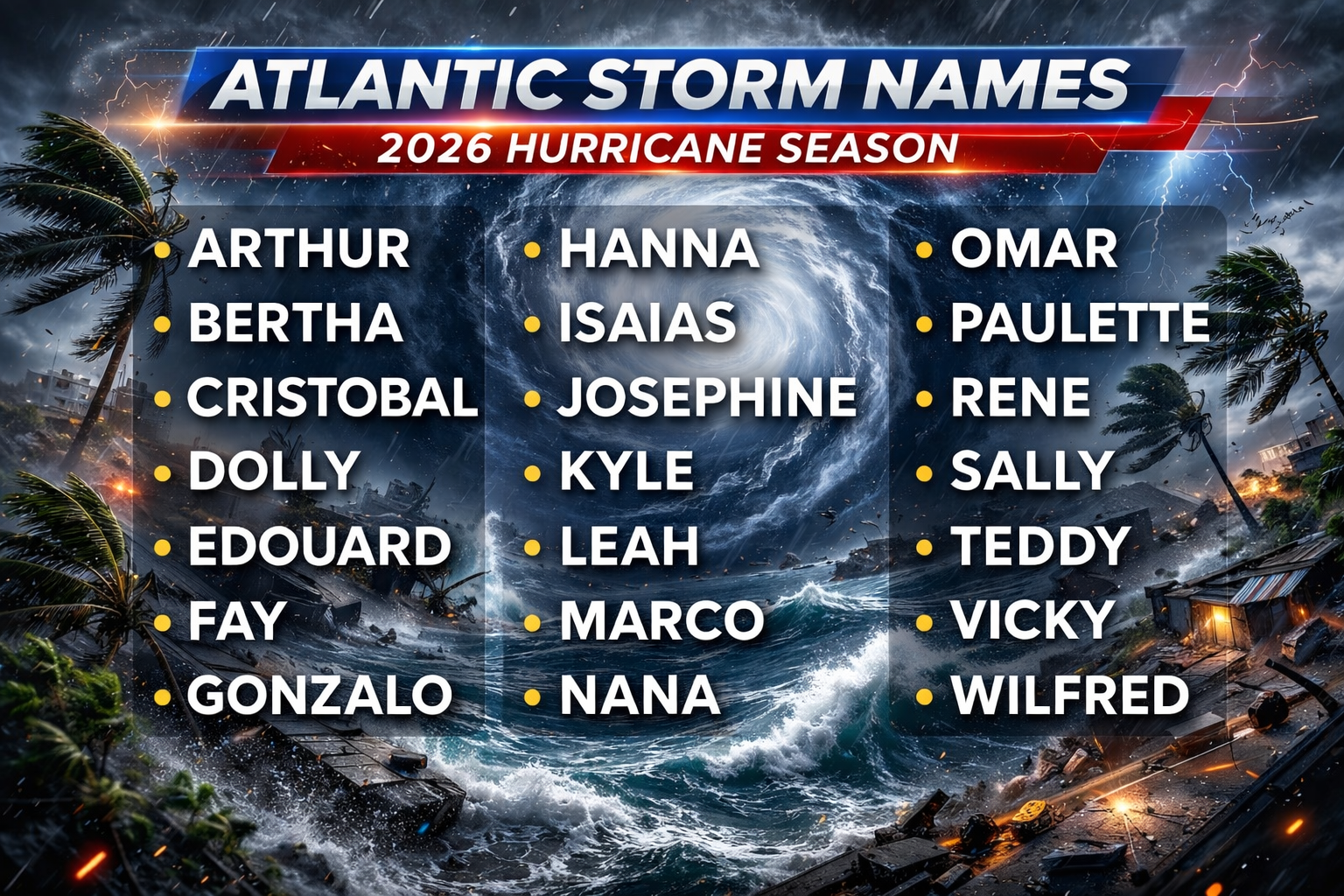

Track The Tropics is the #1 source to track the tropics 24/7! Since 2013 the main goal of the site is to bring all of the important links and graphics to ONE PLACE so you can keep up to date on any threats to land during the Atlantic Hurricane Season! Hurricane Season 2026 in the Atlantic starts on June 1st and ends on November 30th. Do you love Spaghetti Models? Well you've come to the right place!! Remember when you're preparing for a storm: Run from the water; hide from the wind!
Tropical Atlantic Weather Resources
- NOAA National Hurricane Center
- International Meteorology Database
- FSU Tropical Cyclone Track Probabilities
- Brian McNoldy Atlantic Headquarters
- Brian McNoldy Tropical Satellite Sectors
- Brian McNoldy Infrared Hovmoller
- Brian McNoldy Past TC Radar Loops
- Weather Nerds TC Guidance
- Twister Data Model Guidance
- NOAA Tropical Cyclone Tracks
- Albany GFS/ EURO Models/ Ensembles
- Albany Tropical Cyclone Guidance
- Albany Tropical Atlantic Model Maps
- Pivotal Weather Model Guidance
- Weather Online Model Guidance
- UKMet Model Guidance/ Analysis/ Sat
- ECMWF (EURO) Model Guidance
- FSU Tropical Model Outputs
- FSU Tropical Cyclone Genesis
- Penn State Tropical E-Wall
- NOAA HFIP Ruc Models
- Navy NRL TC Page
- College of DuPage Model Guidance
- WXCharts Model Guidance
- NOAA NHC Analysis Tools
- NOAA NHC ATCF Directory
- NOAA NCEP/EMC Cyclogenesis Tracking
- NOAA NCEP/EMC HWRF Model
- NOAA HFIP Model Products
- University of Miami Ocean Heat
- COLA Max Potential Hurricane Intensity
- Colorado State RAMMB TC Tracking
- Colorado State RAMMB Floaters
- Colorado State RAMMB GOES-16 Viewer
- NOAA NESDIS GOES Satellite
- ASCAT Ocean Surface Winds METOP-A
- ASCAT Ocean Surface Winds METOP-B
- Michael Ventrice Waves / MJO Maps
- TropicalAtlantic.com Analysis / Recon
- NCAR/RAL Tropical Cyclone Guidance
- CyclonicWX Tropical Resources
Earn CASH Back On Gas $$$$ 
Shop Store For Essentials
Historic Louisiana Storms By Month
January
June
July
August
September
October
2025 Graphical Tropical Weather Outlook
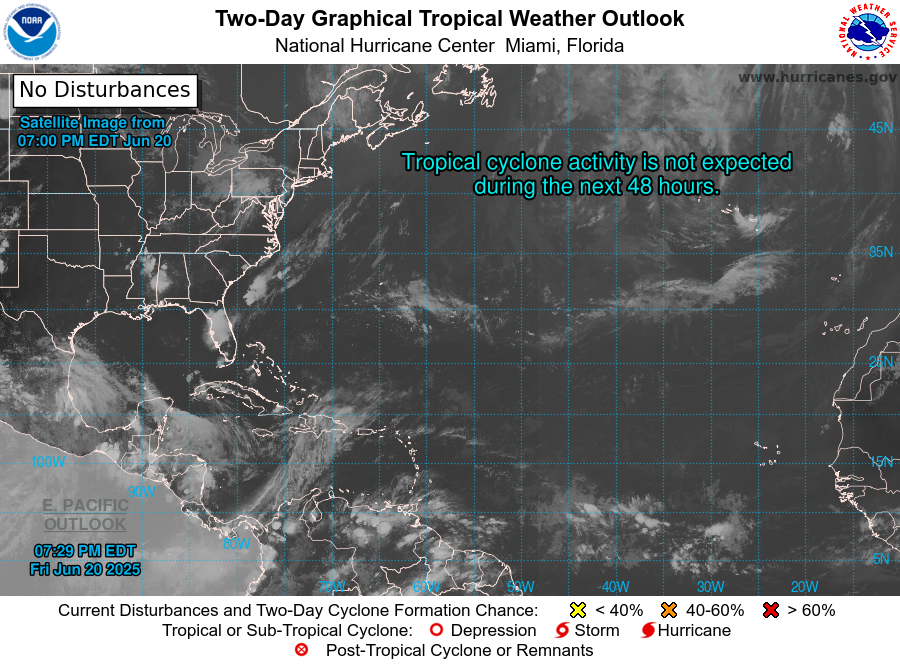
2 Day Graphical Tropical Weather Outlook
7 Day Graphical Tropical Weather Outlook
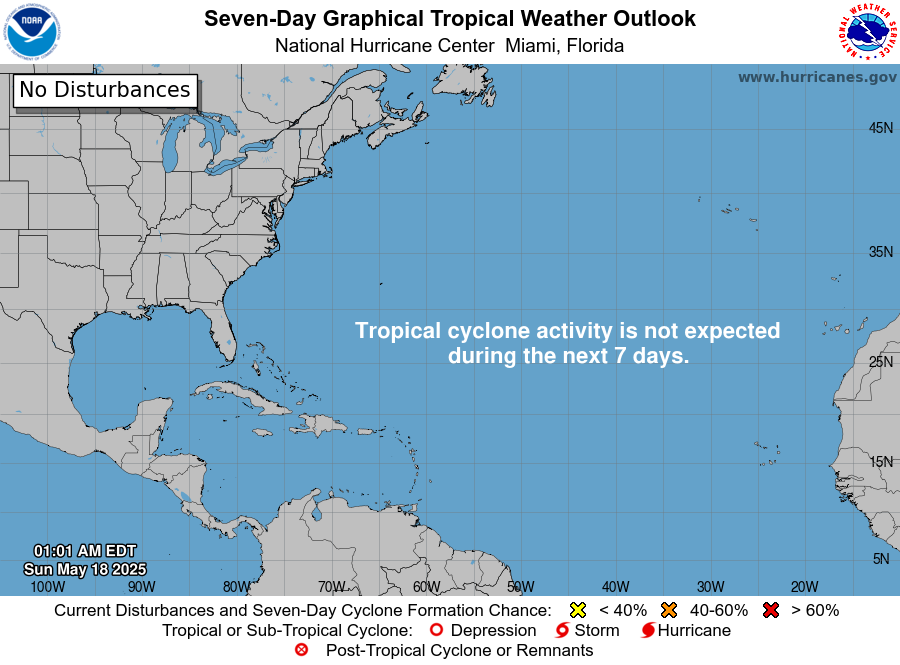
Atlantic Tropical Weather Outlook
- Thu, 03 Sep 2026 22:22:40 +0000: NHC Atlantic Tropical Weather Discussion - NHC Tropical Weather Discussion (Atlantic)
000
AXNT20 KNHC 032222
TWDAT
Tropical Weather Discussion
NWS National Hurricane Center Miami FL
0015 UTC Fri Sep 4 2026
Tropical Weather Discussion for North America, Central America
Gulf of America, Caribbean Sea, northern sections of South
America, and Atlantic Ocean to the African coast from the
Equator to 31N. The following information is based on satellite
imagery, weather observations, radar and meteorological analysis.
Based on 1800 UTC surface analysis and satellite imagery through
2200 UTC.
...TROPICAL WAVES...
A tropical wave is analyzed along 21W south of 20N, moving W at
10 kt. Scattered moderate to isolated strong convection is noted
from 09N to 16N, E of 22W.
A tropical wave is along 48W, south of 20N, moving W at around 15
kt. Convection previously associated with this wave has diminished
this evening.
A tropical wave is along 63W, south of 21N, moving west at around
15 kt. No significant convection is associated with this wave at
this time.
...MONSOON TROUGH/ITCZ...
The monsoon trough enters the Atlantic through the coast of Mauritania
near 18N16W and continues southwestward to 08N29W and then to
11N46W. The ITCZ extends from 10N50W to 08N58W. Scattered moderate
convection is noted from 03N to 12N between 22W and 35W.
...GULF OF AMERICA...
Scattered moderate convection is focused within 30 nm on either
side of a pair of surface trough axes, one of which is oriented
just offshore Florida from near Apalachicola to Tampa Bay and
another extending southeast from just west of the mouth of the
Mississippi River to 27N89W. Winds blow toward lower pressure over
Texas have increased to moderate to fresh offshore NE Mexico and
within 90 nm of the Texas coast, and moderate to fresh NE winds
have developed offshore the Yucatan Peninsula, where a diurnal
surface trough is forming just inland. Otherwise, light to gentle
winds prevail outside of convection. Seas are 3 ft or less.
For the forecast, a diurnal trough will develop over the Yucatan
Peninsula each afternoon supporting locally fresh easterly winds
over the eastern Bay of Campeche through the forecast period.
Elsewhere, weak high pressure prevails and will generally allow for
moderate or weaker winds and slight to moderate seas through the
next few days. The presence of abundant tropical moisture will favor
scattered showers and isolated thunderstorms mainly in the eastern
Gulf through the weekend.
...CARIBBEAN SEA...
The pressure gradient between high pressure to the north and the
Colombian low is maintaining fresh to strong trades and 5 to 8 ft
seas offshore Colombia and western Venezuela. Mainly moderate E
winds and moderate seas prevail across the remainder of the basin,
except the NW Caribbean where gentle winds and slight seas are
present. Scattered moderate convection is noted offshore Costa
Rica and Panama, in associated with the eastern extension of the
Eastern Pacific monsoon trough.
For the forecast, the pressure gradient between the subtropical
ridge and lower pressure in northern South America will maintain
fresh to pulsing strong trades along with moderate seas over the
central Caribbean, and over the western portion of the eastern
Caribbean through Sat night. These trades are forecast to increase
to fresh to strong speeds while expanding in coverage over the
south- central portion of the basin on Mon. Winds reaching near
gale are expected Tue night near Colombia and in the Gulf of
Venezuela. Fresh to pulsing strong east winds are expected in the
Gulf of Honduras Fri night and Tue night. Elsewhere, moderate or
weaker winds and slight to moderate seas will continue across the
remainder of the basin during the period.
...ATLANTIC OCEAN...
A surface trough extending offshore Florida is inducing scattered
moderate convection over and north of the northwest Bahamas. The
remainder of the Atlantic forecast waters is under the influence
of a ridge, with the main high pressure center of 1023 mb located
NE of the Azores. Moderate to locally fresh winds and moderate
seas prevail across much of the Atlantic S of 25N and away from
any convection or tropical waves. Elsewhere, moderate or weaker
winds and 2-5 ft seas prevail.
For the forecast west of 55W, scattered showers and thunderstorms
will continue over the waters W of about 73W through the end of
the week as a mid-level low and surface trough gradually shift
westward while at the same time abundant tropical moisture remains
in place. A cold front will then approach from the NW late this
weekend enhancing the potential for scattered and thunderstorms
over the NW portion of the area. Gentle to moderate east to
southeast winds are over the waters west of 74W. Otherwise, the
subtropical ridge will provide for generally moderate or weaker
winds and moderate seas over the forecast waters.
$$
Konarik
Tropical Weather Discussion
- Thu, 03 Sep 2026 22:22:40 +0000: NHC Atlantic Tropical Weather Discussion - NHC Tropical Weather Discussion (Atlantic)
000
AXNT20 KNHC 032222
TWDAT
Tropical Weather Discussion
NWS National Hurricane Center Miami FL
0015 UTC Fri Sep 4 2026
Tropical Weather Discussion for North America, Central America
Gulf of America, Caribbean Sea, northern sections of South
America, and Atlantic Ocean to the African coast from the
Equator to 31N. The following information is based on satellite
imagery, weather observations, radar and meteorological analysis.
Based on 1800 UTC surface analysis and satellite imagery through
2200 UTC.
...TROPICAL WAVES...
A tropical wave is analyzed along 21W south of 20N, moving W at
10 kt. Scattered moderate to isolated strong convection is noted
from 09N to 16N, E of 22W.
A tropical wave is along 48W, south of 20N, moving W at around 15
kt. Convection previously associated with this wave has diminished
this evening.
A tropical wave is along 63W, south of 21N, moving west at around
15 kt. No significant convection is associated with this wave at
this time.
...MONSOON TROUGH/ITCZ...
The monsoon trough enters the Atlantic through the coast of Mauritania
near 18N16W and continues southwestward to 08N29W and then to
11N46W. The ITCZ extends from 10N50W to 08N58W. Scattered moderate
convection is noted from 03N to 12N between 22W and 35W.
...GULF OF AMERICA...
Scattered moderate convection is focused within 30 nm on either
side of a pair of surface trough axes, one of which is oriented
just offshore Florida from near Apalachicola to Tampa Bay and
another extending southeast from just west of the mouth of the
Mississippi River to 27N89W. Winds blow toward lower pressure over
Texas have increased to moderate to fresh offshore NE Mexico and
within 90 nm of the Texas coast, and moderate to fresh NE winds
have developed offshore the Yucatan Peninsula, where a diurnal
surface trough is forming just inland. Otherwise, light to gentle
winds prevail outside of convection. Seas are 3 ft or less.
For the forecast, a diurnal trough will develop over the Yucatan
Peninsula each afternoon supporting locally fresh easterly winds
over the eastern Bay of Campeche through the forecast period.
Elsewhere, weak high pressure prevails and will generally allow for
moderate or weaker winds and slight to moderate seas through the
next few days. The presence of abundant tropical moisture will favor
scattered showers and isolated thunderstorms mainly in the eastern
Gulf through the weekend.
...CARIBBEAN SEA...
The pressure gradient between high pressure to the north and the
Colombian low is maintaining fresh to strong trades and 5 to 8 ft
seas offshore Colombia and western Venezuela. Mainly moderate E
winds and moderate seas prevail across the remainder of the basin,
except the NW Caribbean where gentle winds and slight seas are
present. Scattered moderate convection is noted offshore Costa
Rica and Panama, in associated with the eastern extension of the
Eastern Pacific monsoon trough.
For the forecast, the pressure gradient between the subtropical
ridge and lower pressure in northern South America will maintain
fresh to pulsing strong trades along with moderate seas over the
central Caribbean, and over the western portion of the eastern
Caribbean through Sat night. These trades are forecast to increase
to fresh to strong speeds while expanding in coverage over the
south- central portion of the basin on Mon. Winds reaching near
gale are expected Tue night near Colombia and in the Gulf of
Venezuela. Fresh to pulsing strong east winds are expected in the
Gulf of Honduras Fri night and Tue night. Elsewhere, moderate or
weaker winds and slight to moderate seas will continue across the
remainder of the basin during the period.
...ATLANTIC OCEAN...
A surface trough extending offshore Florida is inducing scattered
moderate convection over and north of the northwest Bahamas. The
remainder of the Atlantic forecast waters is under the influence
of a ridge, with the main high pressure center of 1023 mb located
NE of the Azores. Moderate to locally fresh winds and moderate
seas prevail across much of the Atlantic S of 25N and away from
any convection or tropical waves. Elsewhere, moderate or weaker
winds and 2-5 ft seas prevail.
For the forecast west of 55W, scattered showers and thunderstorms
will continue over the waters W of about 73W through the end of
the week as a mid-level low and surface trough gradually shift
westward while at the same time abundant tropical moisture remains
in place. A cold front will then approach from the NW late this
weekend enhancing the potential for scattered and thunderstorms
over the NW portion of the area. Gentle to moderate east to
southeast winds are over the waters west of 74W. Otherwise, the
subtropical ridge will provide for generally moderate or weaker
winds and moderate seas over the forecast waters.
$$
Konarik
Active Tropical Systems
- Sat, 05 Sep 2026 11:29:59 +0000: There are no tropical cyclones at this time. - NHC Atlantic
No tropical cyclones as of Fri, 04 Sep 2026 03:22:16 GMT - Thu, 03 Sep 2026 23:29:59 +0000: Atlantic Tropical Weather Outlook - NHC Atlantic
000
ABNT20 KNHC 032329
TWOAT
Tropical Weather Outlook
NWS National Hurricane Center Miami FL
800 PM EDT Thu Sep 3 2026
For the North Atlantic...Caribbean Sea and the Gulf of America:
Tropical cyclone formation is not expected during the next 7 days.
$$
Forecaster Beven
Scheduled Reconnaissance Flight Plans
- Thu, 03 Sep 2026 14:54:27 +0000: Weather Reconnaissance Flights Plan of the Day - Weather Reconnaissance Flights Plan of the Day
249
NOUS42 KNHC 031454
REPRPD
WEATHER RECONNAISSANCE FLIGHTS
CARCAH, NATIONAL HURRICANE CENTER, MIAMI, FL.
1055 AM EDT THU 03 SEPTEMBER 2026
SUBJECT: TROPICAL CYCLONE PLAN OF THE DAY (TCPOD)
VALID 04/1100Z TO 05/1100Z SEPTEMBER 2026
TCPOD NUMBER.....26-095
I. ATLANTIC REQUIREMENTS
1. NEGATIVE RECONNAISSANCE REQUIREMENTS.
2. OUTLOOK FOR SUCCEEDING DAY.....NEGATIVE.
II. PACIFIC REQUIREMENTS
1. HURRICANE LOWELL
FLIGHT ONE - TEAL 78 FLIGHT TWO - NOAA 43
A. 04/1800Z A. 05/0000Z
B. AFXXX 0212E LOWELL B. NOAA3 0312E LOWELL
C. 04/1600Z C. 04/2000Z
D. 13.7N 160.4W D. 13.7N 161.0W
E. 04/1730Z TO 04/2100Z E. 04/2130Z TO 05/0230Z
F. SFC TO 10,000 FT F. SFC TO 10,000 FT
G. FIX G. TAIL DOPPLER RADAR & FIX
H. WRA ACTIVATION H. WRA ACTIVATION
FLIGHT THREE - TEAL 77 FLIGHT FOUR - NOAA 43
A. 05/0600Z A. 05/1200Z
B. AFXXX 0412E LOWELL B. NOAA3 0512E LOWELL
C. 05/0400Z C. 05/0800Z
D. 13.8N 161.5W D. 13.9N 162.0W
E. 04/0530Z TO 05/0900Z E. 05/0930Z TO 05/1430Z
F. SFC TO 10,000 FT F. SFC TO 10,000 FT
G. FIX G. TAIL DOPPLER RADAR & FIX
H. WRA ACTIVATION H. WRA ACTIVATION
2. HURRICANE KARINA
FLIGHT ONE - NOAA 49
A. 05/0000Z
B. NOAA9 0111E KARINA
C. 04/1700Z
D. NA
E. NA
F. 41,000 TO 45,000 FT
G. SYNOPTIC SURVEILLANCE
H. NO WRA ACTIVATION
3. SUCCEEDING DAY OUTLOOK:
A. CONTINUE 6-HRLY FIXES ON LOWELL.
B. NOAA P-3 TAIL DOPPLER RADAR MISSIONS INTO LOWELL FOR
FOR 06/0000Z AND 06/1200Z, DEPARTING PHKO AT 05/2000Z AND
06/0800Z, RESPECTIVELY.
C. NOAA G-IV SYNOPTIC SURVEILLANCE MISSION AROUND HURRICANE
LOWELL FOR 06/0000Z, DEPARTING KHNL AT 05/1730Z.
4. REMARK: DURING THE NOAA 43 MISSION TASKED FOR THE 05/1200Z
SYNOPTIC TIME, FOUR SMALL UAS ARE PLANNED FOR RELEASE WITHIN
THE WRA. THEY WILL OPERATE AT OR BELOW 5,000 FT FOR ABOUT
1 TO 2 HOURS.
$$
SEF
NNNN
Marine Weather Discussion
- Mon, 17 May 2021 15:22:40 +0000: NHC Marine Weather Discussion - NHC Marine Weather Discussion
000
AGXX40 KNHC 171522
MIMATS
Marine Weather Discussion
NWS National Hurricane Center Miami FL
1122 AM EDT Mon May 17 2021
Marine Weather Discussion for the Gulf of Mexico, Caribbean Sea,
and Tropical North Atlantic from 07N to 19N between 55W and 64W
and the Southwest North Atlantic including the Bahamas
This is the last Marine Weather Discussion issued by the National
Hurricane Center. For marine information, please see the Tropical
Weather Discussion at: hurricanes.gov.
...GULF OF MEXICO...
High pressure along the middle Atlantic coasts extending SW to
the NE Gulf will remain generally stationary throughout the
week. This will support moderate to fresh E to SE winds over the
basin through Tue. Winds will increase to fresh to strong late
Tue through Fri as low pressure deepens across the Southern
Plains.
...CARIBBEAN SEA AND TROPICAL N ATLANTIC FROM 07N TO 19N BETWEEN
55W AND 64W...
A ridge NE of the Caribbean Sea will shift eastward and weaken,
diminishing winds and seas modestly through Wed. Trade winds
will increase basin wide Wed night through Fri night as high
pressure builds across the western Atlantic.
...SW N ATLANTIC INCLUDING THE BAHAMAS...
A weakening frontal boundary from 25N65W to the central Bahamas
will drift SE and dissipate through late Tue. Its remnants will
drift N along 23N-24N. The pressure gradient between high
pressure off of Hatteras and the frontal boundary will support
an area of fresh to strong easterly winds N of 23N and W of 68W
with seas to 11 ft E of the Bahamas late Tue through Fri.
$$
.WARNINGS...Any changes impacting coastal NWS offices will be
coordinated through AWIPS II Collaboration Chat, or by
telephone:
.GULF OF MEXICO...
None.
.CARIBBEAN SEA AND TROPICAL N ATLANTIC FROM 07N TO 19N BETWEEN
55W AND 64W...
None.
.SW N ATLANTIC INCLUDING THE BAHAMAS...
None.
$$
*For detailed zone descriptions, please visit:
http://www.nhc.noaa.gov/abouttafbprod.shtml#OWF
Note: gridded marine forecasts are available in the National
Digital Forecast Database (NDFD) at:
http://www.nhc.noaa.gov/marine/grids.php
For additional information, please visit:
http://www.nhc.noaa.gov/marine
$$
.Forecaster GR. National Hurricane Center.
Atlantic Tropical Monthly Summary
- Thu, 01 May 2025 13:04:51 +0000: Atlantic Monthly Tropical Weather Summary - Atlantic Monthly Tropical Weather Summary
000<br />ABNT30 KNHC 011304<br />TWSAT <br /><br />Monthly Tropical Weather Summary<br />NWS National Hurricane Center Miami FL<br />900 AM EDT Thu May 1 2025<br /><br />This is the last National Hurricane Center (NHC) Tropical Weather <br />Summary (TWS) text product that will be issued for the Atlantic <br />basin. The tropical cyclone statistics from the TWS will be found <br />on hurricanes.gov beginning with the 2025 hurricane season. This <br />change will allow for more frequent updates to the statistics and <br />the addition of graphics and links to supporting information that <br />this text only format cannot support. An account of tropical <br />cyclone names, classification (i.e., tropical depression, tropical <br />storm, or hurricane), and maximum sustained wind speed will be found <br />on hurricanes.gov at this url beginning around July 1: <br /><br />https://www.nhc.noaa.gov/data/tcr/index.php?basin=atl<br /><br />A sample webpage is provided here, with the "2023 Atlantic Summary <br />Table (PDF)" example linked below the Tropical Cyclone Reports <br />(TCRs):<br /><br />https://www.nhc.noaa.gov/data/tcr/index.php?season=2023&basin=atl <br /><br />This information will be updated no less frequently than monthly <br />during the hurricane season and will be updated after the season's <br />TCRs are completed to document the official record of the season's <br />tropical cyclone activity. Previously, the statistics and data in <br />the TWS were based on real-time operational assessments and were <br />not updated when the season's TCRs were complete. The new <br />web-based format allows the information to be updated once the <br />post-analysis for the season is complete. <br /><br />For more information, see Service Change Notice 25-22: Migration of <br />the Tropical Weather Summary Information from Text Product Format to <br />hurricanes.gov:<br /><br />https://www.weather.gov/media/notification/pdf_2025/scn25-<br />22_moving_info_from_tws_to_hurricanes.gov.pdf